How to Choose a Martial Arts School
Read or watch the video to discover some of the important points that you should consider when choosing a Martial Arts school.
Who is Taking the Classes?
The first step is answering the above question. That will help you determine what you or your child hopes to achieve and the benefits you or your child seeks in a martial arts program to help you reach your goals.
These benefits are essential because many martial arts schools specialize in one area and may not in another. For example, if you are over 60, you would not want to attend a Judo or MMA school because these schools are more geared toward competition and younger athletes.
Why Do You or Your Child Want to do Martial Arts?
Once you know what you want to achieve and some of the benefits that you want from a Martial Arts program, the next step is to determine why you think Martial Arts can help you or your child achieve those goals.
For children, is this something that you want them to do, or did they express an interest in it because of friends, TV, or movies? As a parent, you probably have already determined what your child needs (i.e., discipline). However, if your child expresses interest, ask them questions and learn the real reasons they might want to do martial arts. Are they getting picked on in school? Have the neighborhood kids bullied them? Or is it because of a movie?
For you, determine exactly what you want to gain from a program. Adults have various reasons for taking up martial arts, which are determined by age and physical limitations (such as injuries). However, anyone can learn martial arts if they choose the right program to fit their needs.
Tip 3 - Determine What are Some of the Benefits You Want to Get From the Program.

For Children
Discipline
Concentration
Conditioning
Goal Setting
Commitment
Bully Busting
Self-esteem
Leadership
Confidence
Weight Control

For Adults
Conditioning
Muscle Tone
Flexibility
Discipline
Self-defense
Relaxation
Stress Relief
Confidence
Leadership
Weight Control
Improved Health
Learn More about the Different Types of Martial Arts
Now, how do you determine what type of martial arts is going to meet your goals? There are several martial arts types. These martial arts types break down into four categories or methods based on the country of origin. These are:

Kung Fu
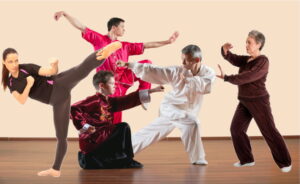
Chinese martial arts include a variety of styles and methods. Chinese martial arts are the granddaddy of all the other martial arts because all other martial arts developed from Kung Fu in some form or another. The first recorded history of Kung Fu is typically attributed to the Shaolin Temple, though it was practiced before that. What makes the temple unique is that it catalogs the various styles and brings Kung Fu to an all-new level of perfection.
Kung Fu is characterized by circular techniques and by using the opponent's force against them to defeat them. Kung Fu is a complete method of martial arts, from your typical punching and kicking to Ground-fighting. Most Kung Fu methods are based on different animals, such as the Crane, Snake, Tiger, Leopard, Dragon, Mantis, and Eagle.
Kung Fu typically uses long-arm techniques and smooth hip action to generate power.

Tai Chi
Tai Chi is an actual martial art used for relaxation, exercise, and even self-defense. However, it is not offensive. In other words, someone has to attack you first to be effective. When they do, you then redirect that attack away from you to unbalance them and use their attacking force against them.
Today, Tai Chi is used for its many health benefits. Tai Chi practice is slow, relaxed, with rhythmic movements that relieve stress and promote relaxation. These low-impact movements are great for older individuals (regardless of health issues) to improve flexibility, muscle tone, and overall health. Scientific research shows that Tai Chi is more beneficial than physical therapy for many individuals.
Many places teach Tai Chi. However, you need to be aware of unqualified instructors. Many of these teachers learn Tai Chi learn from a video or a quick online program. Thus, they are not qualified to teach Tai Chi properly. It would be best if you learned Tai Chi from only a qualified instructor with years of experience who can adequately teach Tai Chi so you can get the most benefits that Tai Chi has to offer.

Okinawan Karate
Okinawan Karate (the word karate means "Chinese hand") is based on some Kung Fu techniques. Okinawan karate developed from Chinese Kung Fu in the 1600s. Chinese businessmen who traveled to Okinawa would share some of their knowledge with their counterparts. Later, some of these Okinawans would travel to China's Southern Shaolin Temple to improve their techniques and skills.
Okinawan karate is a mixture of what we would call hard and soft. What that means is that some of the moves use circles for blocking, followed by short-arm striking techniques. These short-arm techniques use quick snap motions of both the hips and the striking technique.
Some popular Okinawan styles include Isshin-ryu, Goju-ryu, and Shorin-ryu.
Japanese Karate
Shotokan was developed in the 1900s by the popular Okinawan teacher Gichin Funakoshi. He traveled to Japan to teach Okinawan karate. However, when he got there, he soon discovered that the Japanese mentality was different from that of the Okinawans. So, he modified the style by removing most of the circular techniques and replacing them with stiff, robot-like blocks and strikes. That fit the Japanese mentality better: he soon opened a small school called Shoto Kan (Kan means "hall" or "building"). Shoto (which means pine tree) was Gichin Funakoshi’s pen name for writing. Eventually, the style became known as Shotokan.
Shotokan is typically a hard, robotic style with an emphasis on hand techniques and kicks focused on the middle and lower parts of the body. The forms are the same as taught in Okinawa, except for the execution of the techniques, as stated above. There are other karate styles in Japan, but this one is the most popular.

Korean Karate
Korean Karate developed from Shotokan Karate. The Japanese occupied Korea until after WW 2, so many Shotokan schools were in Korea. However, after World War 2, the Koreans won their independence and wanted nothing to do with the Japanese. Therefore, they renamed Shotokan to Taekwondo. Later, due to politics, another branch developed: Tang Soo Do.
The Korean martial arts were then changed from the original Shotokan style. The fundamental change they introduced into Korean karate was the use of high kicks. They also added many more jumping kicks. Though these kicks were not practical in a self-defense situation, they were flashy and helped improve conditioning and flexibility. So, the essential Korean martial arts are characterized by stiff-robotic strikes and blocks (like Shotokan) and high kicks.
There are many, many other methods of martial arts. However, these are the most popular practices today.

What the Heck is MMA
That is a question that needs to be answered. MMA stands for Mixed Martial Arts, and that’s precisely what it is. A mixture of various martial arts styles. There is no cohesiveness to MMA. In other words, you might learn a little of one technique and a bit of another type of technique. The problem with this is that you are not learning a martial art, nor are you perfecting any techniques based on a method of training.
MMA has been around for years. Many Korean, Japanese, and Okinawan arts were found to lack techniques in their styles. That was especially true when they saw Kung Fu. So, they would film Kung Fu practitioners at a tournament, watch their moves and weapons, and try to imitate, change, or add to their styles. There is nothing wrong with this. However, the techniques they were trying to add might not be compatible with their style or training method. That, in turn, makes these techniques less effective.
They also started making up techniques for competitions. Again, losing the original style’s overall flavor and effectiveness. Eventually, because so many of the “Karate” schools were doing this, it became known as MMA… and eventually morphed into just a sport.
Unless you’re attracted to this type of competition, I personally would recommend finding a system or method as listed above to perfect and work toward a goal. That way, you have something tangible and a method that has been tried and perfected over hundreds of years.
There are Different Types of Schools
Now that you have a good understanding of what type of school you might want to try based on the above information, you must decide what your overall goal is and which schools might meet those criteria.
System or Style Schools
These schools stick with their traditions and methods. Very little has changed over the years, and they usually have a hierarchy of teachers and students from a Grandmaster down to the White belts. They preserve the techniques and teach you how to use them.
These schools have a traditional outlook. They have rituals that they follow from ancient traditions, such as bowing, terminology, testing, routines (choreographed movements), weapons, and a progressive ranking system.
Self-Defense
These types of schools usually do not teach a cohesive system and are mostly geared toward just self-defense. However, there are several types of self-defense: traditional or systematic, depending on the kind of attacks.
Tradition-based methods are harder to learn and perfect, and often do not cover specific defenses against specific types of attacks. Many of these schools use a Kata (a series of moves from their traditional style) to teach self-defense. These techniques rely on your attackers using the same techniques. That's not realistic.
Systematic methods teach a specific attack and how to handle that typical street attack. This method is much easier to learn. However, you usually lose the techniques that traditional-based systems cover, for example, proper technique and power development. Unless you understand these two (proper technique and power development), your techniques will be less effective than they should be.
Ideally, you want a method that combines both traditional and systematic approaches. That way, you can learn the proper techniques and a systematic approach to self-defense. Only Kung Fu offers this type of training. The reason? It is based on actual combat and was taught to the soldiers in ancient China for hand-to-hand combat. During their training, the soldiers first worked on their power and proper techniques, then practiced against actual opponents.
Fighting & Tournaments
These types of schools concentrate on what we call tournament or point sparring. The students travel to various events and compete against other schools. They compete in several tournament divisions: forms (choreographed movements), point sparring (coming close but not striking their opponent; they receive a point, with typically 3 points to win a match), and weapons of all types.
There is nothing wrong with competition if that's what you or your child is looking for in a martial arts program. However, tournaments tend to overlook many other aspects, such as self-defense. One type of school we discussed previously is MMA. They deal exclusively with competition and train their clients that way. That is usually fine for younger students under 30, but often not for anyone over 30.
Kickboxing
Kickboxing is not really a martial art. Kickboxing is a basic exercise program that uses martial arts techniques, punches, and kicks. You'll notice one of the things missing from the earlier sentence. You guessed it, blocking. All you do is punch and kick, and you never learn or practice the proper way to block. Most defensive situations start with a block, so you'd be out of luck in that department.
There's nothing wrong with that if that's what you want, an exercise program. However, one thing to look out for, many of these facilities do not have highly trained martial artists teaching the classes. Often, coaches are trained to run classes in a few weeks. They cannot offer corrections to improve the speed or power of the techniques because they haven't trained long enough to learn these aspects. Also, there is a minimal number of techniques that you will do.
In Conclusion
These are the major variations of martial arts schools and their focus. Naturally, there are offshoots of these. Ideally, you might want to consider a school that focuses on several categories rather than just one to give yourself more options. I would recommend the following:
* Traditional aspects but reworked for today's lifestyle. It should be easy to remember the curriculum but challenging enough to improve and not get bored.
* Classes Separated by Age
* The school should have a comprehensive self-defense program incorporated into its regular curriculum.
* Kickboxing (Sparring) should also be incorporated into the regular curriculum.
Why do I offer these pointers to you? Simple. Because, unless you want to focus on just one aspect, as mentioned above, you want a well-rounded program that provides you with the best skills, exercises, and an understanding of martial arts in general.
Traveling Distance
People travel across the city for quality instruction in gymnastics, ballet, music, and golf, so be prepared to do the same for martial arts. Once you start with the school next door, it is almost impossible to move to another facility if you discover problems Instructional/Financial, etc.), and you or your child might have already bonded with the instructors or the style. Most schools are reluctant to take students from other schools, especially if they are from the same style or system.
The best thing to do is decide how far you are willing to drive for classes a few days a week. For some people, it might make sense to drive 45 to 60 minutes. However, most people would rather keep their travel distance to 15 miles or less.
The next step would be to determine the best martial arts school within that driving range that meets your goals and the other criteria listed above.
Visiting
After making a list of schools in your travel area, the next step is to visit each school’s website. Some of the things to look for on the website:
- Do they provide information about their programs?
- Is there written material and/or videos showing you what they do?
- Does the site look like it is just sales-oriented? Usually marked with long pages and little information.
- Do they offer a Trial Program, Free Visit, etc.?
- Are they easy to contact to answer your questions?
- Do they have an easy way for you to get more information mailed to you?
After you checked out the sites and got the information you needed, you want to visit the school. This is usually done through a trial program. It can be a paid trial for a few lessons, free, or another type of trial period that lets you really see if this is what you’re looking for.
Schedule this online or call the facility to make an appointment. Some schools will allow you to just visit and watch a class, but I recommend taking a few classes. Unless you’ve studied before, you probably will have very little information to make a decision about the school just from watching.
If you’re watching an advanced class, you might be scared away because you think that you’ll never be able to do that. The class might be geared toward something you have no interest in, or toward another program they offer. For example, there’s a huge difference between Kung Fu and Tai Chi. So if you wanted something more relaxing and slow-paced and were watching a Kung Fu class, you’d be a little confused.
The Facility

Just like any business, the way the facility looks and its cleanliness (or lack thereof) says something about the attitude and aptitude of the owner. A martial arts school doesn't have to look like a Starbucks, but it ought to be clean and organized. If a school doesn't look professional, chances are it isn't.
Training Equipment
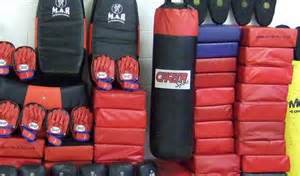
Do they offer modern training equipment? Some types of equipment most schools have include heavy bags, large body bags, focus mitts, and forearm-kicking bags. They should use these bags during their workouts because they enhance the techniques, provide a better workout, and improve conditioning. For self-defense, these are invaluable. You must learn to build strength and power, and this is a great way to do so.
One caveat. Make sure that the school has softer bags for your kids. Their bones are still forming, and hitting hard objects can damage them. Many schools have their kids’ break boards as part of tests. This could be very dangerous to their growing bones and hamper their formation.
Staff
As you would expect from any business, the staff of a martial arts school should be courteous, professional, and personable. They should treat you (and your child) as a paying customer. If you can go to a department store and get better service than you can at your local martial arts school, spend your money at the department store or somewhere else.
Martial Arts Instructors
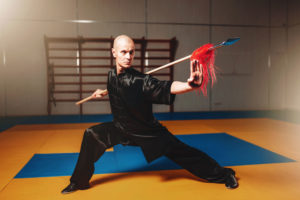
Next, investigate the instructors. There are several criteria that you wish to evaluate. Just like going to any other business, are the staff and instructors courteous and friendly? Do they make you feel comfortable?
Don’t worry about degrees and certificates; there are no universal grading standards and no universally recognized governing body in martial arts. What’s important is:
- Who did this person learn from?
- How long did he or she study with this person?
- How long has he/she practiced this art?
Does the teacher have any teaching experience, or is he or she merely a skilled martial artist? Great martial artists are not necessarily great teachers because great football players can make bad coaches (and vice versa).
Too many schools now have black belts earned in just a few years. Be very cautious of these types of instructors. Another important question is who teaches the classes. Many schools, even though they have a black belt on staff, might have an under black belt teaching the classes. Worse yet, many use a method in which white belts are taught by Orange belts (the next belt up), and Orange belts learn from the next belt up.
Age Groups
Classes should be divided by age groups. Naturally, if you’re an adult, you do not want to be in a class with a bunch of kids. And kids should be separated by age groups such as 4 to 5, 6 to 8, etc. Each of these age groups has different learning abilities, both physical, emotional, social, and intellectual. The programs offered should be geared toward these different areas and age groups. The school should not have one plan for all these different age groups. In other words, the techniques can remain the same, but the way they are taught and introduced to different age groups should differ.
Class Sizes, Times, and Length
Class sizes can be large or small. The vital point to remember here is the student-to-instructor ratio. I recommend having one instructor for every ten students.
Many new students prefer to be part of a large training group, rather than a small class. However, the benefits of a smaller class should not be overlooked. You will likely receive more individual attention from the instructor in a smaller class, and there is less chance of becoming "just a number." If you prefer private one-on-one lessons with the chief instructor, that should be a choice.
Also, check with the instructor about the time of day they offer classes and the duration. Some schools provide 90-minute classes. However, fitting in with today's lifestyle might be impractical, especially a few times a week. I never recommend this length of time for beginners. It takes time to get back into shape and improve strength and flexibility. After all, you wouldn't run a marathon if you hadn't run for a few years.
Typically, classes should be about 30 to 45 minutes. Believe me, if you are taking a fast-paced class with a great instructor, you will have a fantastic workout. If you choose a slower-paced workout, such as Tai Chi, the same holds true. The postures, though gentle and slow, really work the muscles, so you want gradual progress.
Belts and Testing

Some martial arts instructors are in business to get your money and couldn't care less about your progress in the art they teach. To find out if this is the case, ask the instructor about his belt-ranking system. If he says you need to be proficient in a certain number of basic movements, forms, sparring, and self-defense techniques before he will promote you to a higher belt level, you are likely dealing with an honest teacher.
If, on the other hand, the instructor tells you that you will receive a new belt every two months, be wary. You should never move up in rank until you are ready and qualified. An excellent instructor does not push students to move up in rank merely to collect a belt-testing fee.
That I put in Programs and Pricing because this kind of goes hand in hand with the next topic: many schools will charge a lower monthly fee and then make up the difference with testing fees. Testing fees start small at the lower belts, usually around $30 to $35 per test. However, as you progress up the ladder, they raise the fees higher and higher. Many schools charge thousands of dollars to take a black belt test.
Another area where they make up the difference is with uniforms and equipment. As you progress through the different levels, you require various equipment and different types of outfits. That adds to your monthly total cost. For example, a school can charge you $100 per month, which you think is cheaper than the schools in the area. But once you add in testing fees, association fees, and extra equipment at each belt, you could be paying well over $200 a month. Keep your eyes open for this.
Programs and Pricing

The sticking point for many schools is that some charge month-by-month with no commitment. That's fine, but there is no commitment on either your part or theirs. To make progress in anything requires only 2 things: desire and commitment; if you have the desire, then you must make some type of commitment.
I would stay away from a month-to-month type of school. It is hard today for a martial arts business to pay the bills and rent without some type of financial arrangement with its members. These schools go out of business quickly, leaving you trying to find another school. It sounds appealing at first because maybe you can go for one month and pay, then take a month off and not pay. However, as mentioned above, you will not make any progress at all and might as well not start a program.
Rarely do martial arts schools advertise their instruction prices in the phone book or on their website. Prices can be determined monthly, over several months, or based on how often you train each week. In some cases, the price is negotiable depending on how many people will be taking classes with you (e.g., family package deals). It is up to you to determine what you feel is a fair and manageable price for instruction. After some research, you will know who is asking too much.
What to look for is a variety of options to join a school. As I said previously, most schools usually offer 6- to 12-month agreements, but some might rope you into a longer-term agreement, like 36 months. Do not enter into these long-term agreements at the beginning. If you need a shorter evaluation period, ask for a shorter term. I recommend at least try the program for at least 3 months. You might pay a little more, but if it isn't for you, you're not locked into a longer-term.
A Trial Program
The first step, once you decide on a school, is to take a Trial Course. Call or go online to make an appointment with the school for the Trial Course. Typically, many schools offer anywhere from a few lessons to several weeks of instruction. If they do not have a trial course, then steer clear and look for another facility. That is just like buying a car. If you went to the car dealer and were refused a test drive, would you buy the vehicle? Probably not. Take the school for a test ride.
Copyright © Rothrock's Kung Fu & Tai Chi. All Rights Reserved